Newsletter
Spring–summer 2026
Professor Gert Aarts, Director of AIMLAC

Dear AIMLAC students, supervisors, partners and alumni,
I am writing this preface with mixed feelings. AIMLAC has been one of the most rewarding and enjoyable initiatives I have had the privilege to lead at Swansea University. But, as we all know, all good things must come to an end.* At the end of July I will not only be leaving Swansea, Wales and the UK, but I will re-enter the European Union to take up a professorship at Bielefeld University in Germany.**
Supported by an Advanced Professorship from the W�bben Foundation, I will continue my research on Quantum Chromodynamics under extreme conditions, alongside the development of AI and machine learning methods for lattice field theory. The support is extremely generous. Unfortunately, it does not include a sea view, but I have decided to accept this minor downgrade.
One of the ambitions of my new position is to bring the type of doctoral training we have in AIMLAC to Germany. If all goes well, I hope there will be a sequel in due course, naturally entitled AIMLAC Zwei.
I would like to thank everyone who has contributed to AIMLAC over the past years. Thank you for your enthusiasm, support and hard work; for the outstanding research, theses and publications; and for helping to create such a vibrant and welcoming community through the many events and activities. AIMLAC has been a tremendous success because of your collective efforts, and it has been a pleasure to be part of it.
Alles Gute,
Gert
* AI informs me that this phrase originates from Geoffrey Chaucer's "Troilus and Criseyde" (14th century). Who knew?
** Claims that Bielefeld does not exist are greatly exaggerated.
A fond farewell to Professor Gert Aarts - Director of AIMLAC
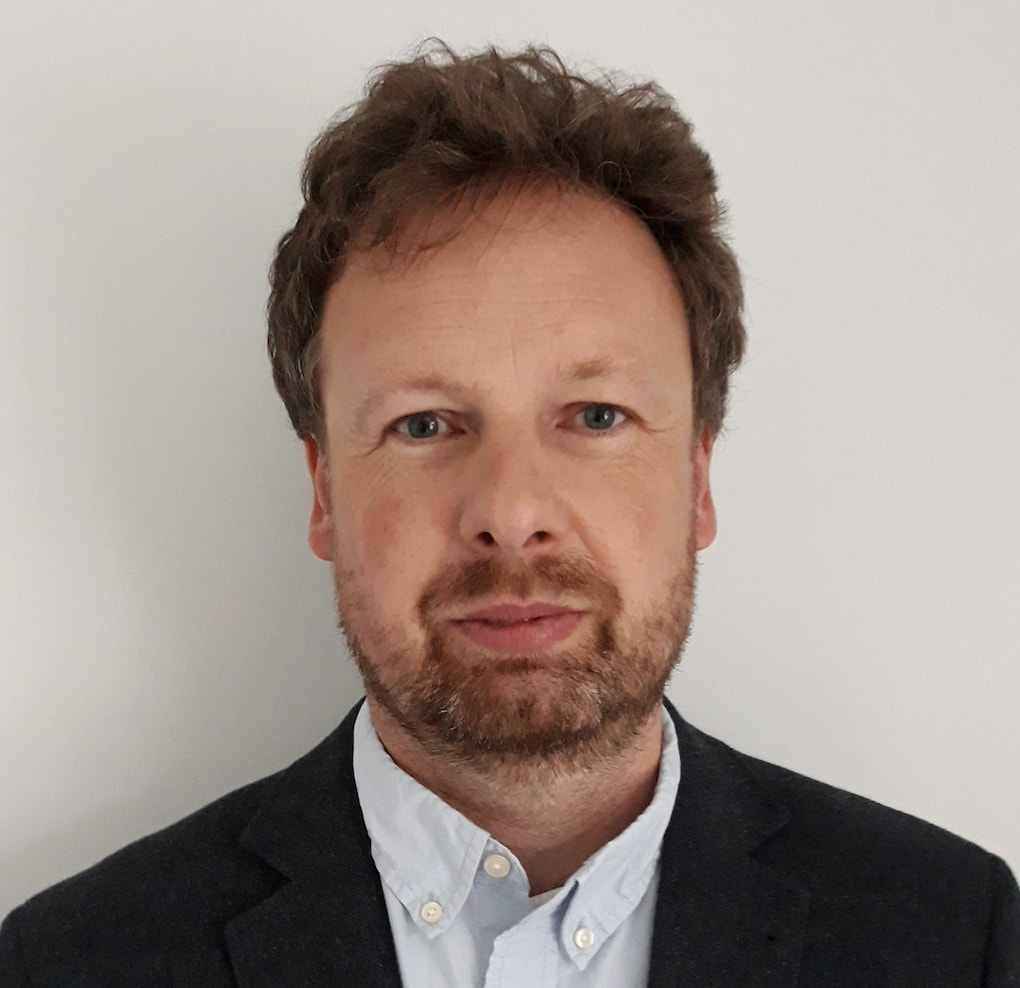
We would like to extend our sincere thanks and best wishes to Professor Gert Aarts as he steps down from his role as Director of AIMLAC.
Since becoming the Director of AIMLAC in 2019, Professor Aarts has played a pivotal role in shaping AIMLAC into the thriving, collaborative programme it is today. His leadership has helped establish a strong interdisciplinary foundation, bringing together expertise across physics, computing, and data science to deliver world-class doctoral training and research.
A Professor of Theoretical Physics at Swansea University, Professor Aarts' work sits at the intersection of cutting-edge science and advanced computing which is an alignment that has greatly influenced AIMLAC’s vision and direction. Beyond AIMLAC, Professor Aarts has held a number of significant leadership roles, including Head of the Particle Physics and Cosmology Theory group and Deputy Pro-Vice-Chancellor for Postgraduate Research at Swansea University. He is also a Fellow of the Learned Society of Wales and a recipient of prestigious awards such as the Royal Society Wolfson Research Merit Award.
On behalf of the AIMLAC community, we thank Professor Aarts for his outstanding leadership and dedication, and we wish him every success in his future endeavours.
Welcome Professor Chris Allton – New Head of AIMLAC
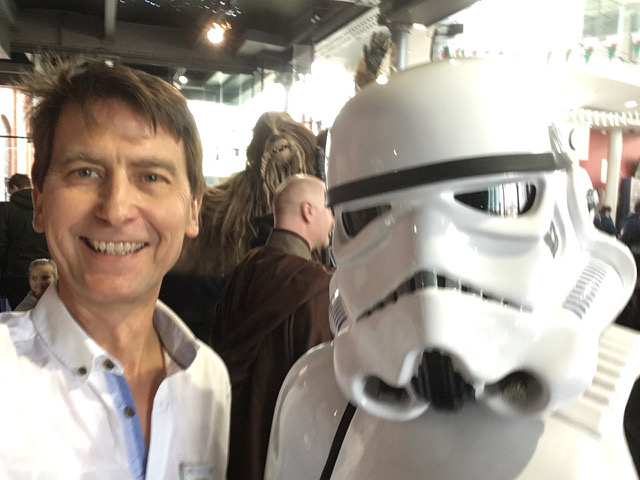
We are delighted to announce Professor Chris Allton as the new Head of AIMLAC. Professor Allton brings a wealth of academic expertise and leadership experience to the role. A Professor of Theoretical Physics at Swansea University, his research focuses on understanding the fundamental building blocks of the universe, using advanced computational techniques to explore the behaviour of quarks, protons and other particles under extreme conditions. This deep engagement with high-performance computing and complex data-driven modelling aligns closely with AIMLAC’s mission.
Originally from Australia, Professor Allton has built an international academic career spanning institutions in the UK and Italy before joining Swansea University. He is the founder of Oriel Science, an initiative dedicated to bringing interactive research experiences into accessible community spaces and inspiring wider audiences to engage with science and innovation. Through this work, Oriel Science has engaged large and diverse audiences, showcasing the impact and accessibility of cutting-edge research. We warmly welcome Professor Allton to AIMLAC and look forward to benefiting from his vision, experience and passion for both research and outreach to further strengthen AIMLAC's impact across academia, industry and society.
Student updates
Chanju Park
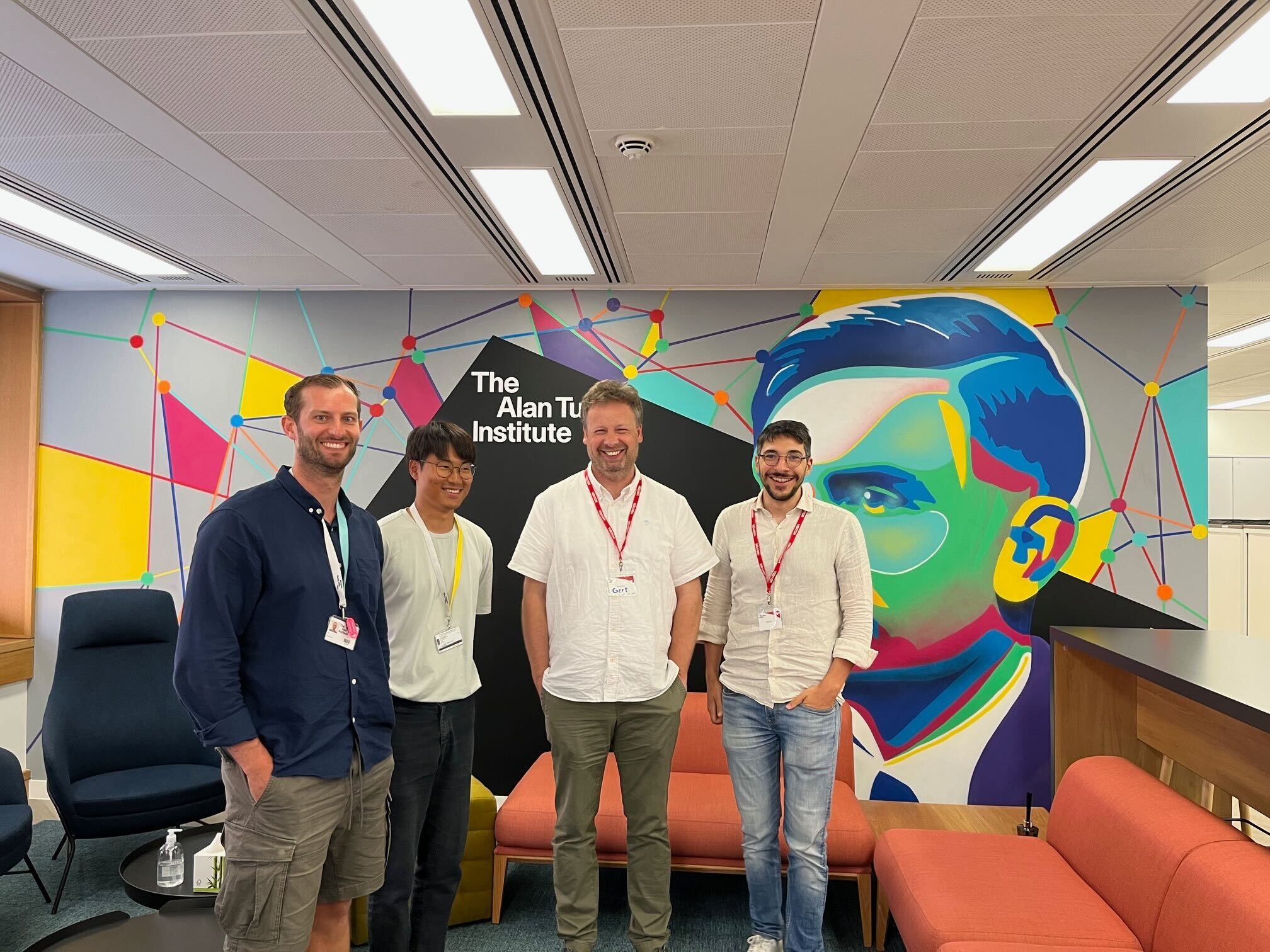
Chanju Park, a PhD student with the AIMLAC CDT based in the Department of Physics, recently organised a workshop at the Alan Turing Institute in London.
As part of his Enrichment Placement at the Turing, which runs from September 2024 to July 2025, Chanju brought together researchers for an informal workshop on June 20th to explore the "theory of hyperparameter tuning from neural network training dynamics".
The event featured talks by Antonio Sclocchi (Gatsby Unit, UCL Theory of Learning Lab) and Gert Aarts (Swansea), along with a tutorial by Diego Granziol (Mathematical Institute, Oxford).
Discussions focused on the stochastic nature of learning and its parallels with non-equilibrium physical systems involving many fluctuating degrees of freedom. A key insight that emerged was the concept of a phase diagram for neural networks, located in the space of hyperparameters. This phase diagram helps practitioners in selecting parameter regimes where learning is most effective.
Matt Walker
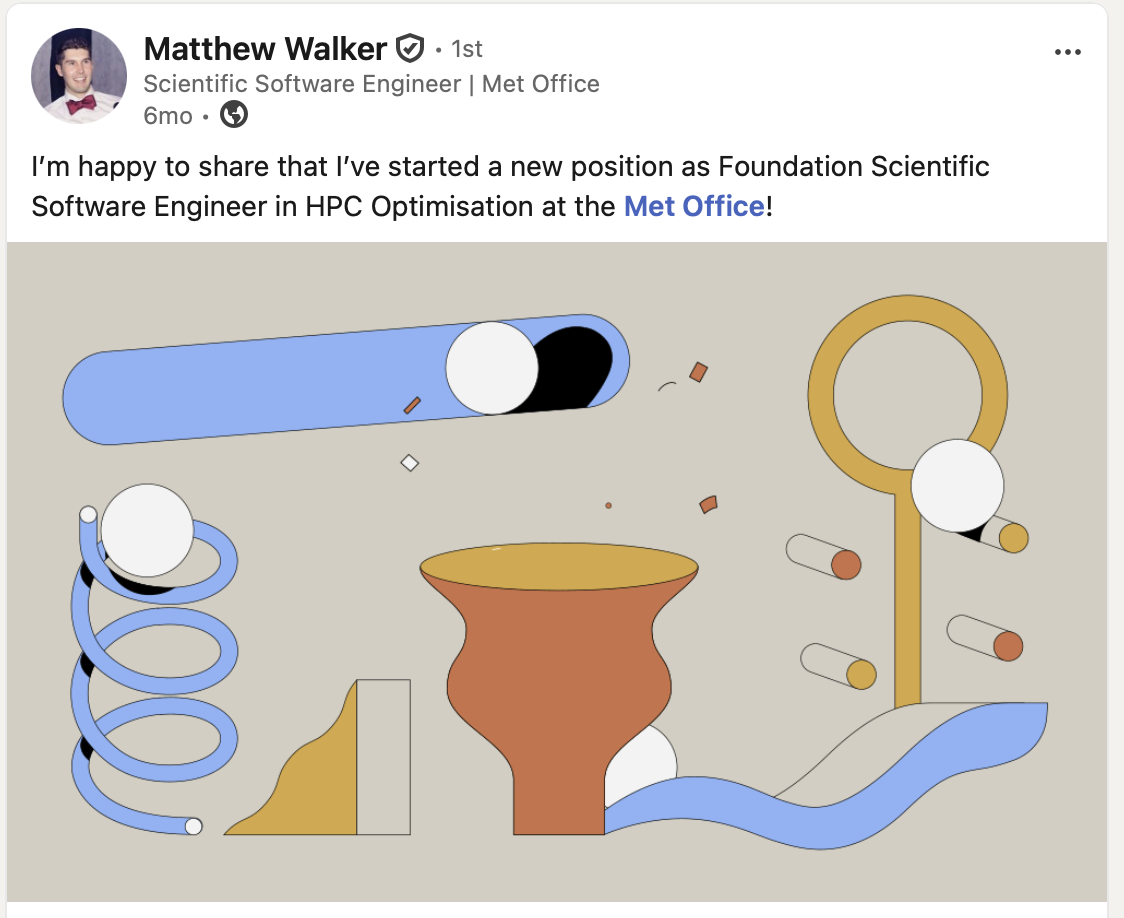
Huge congratulations from all at AIMLAC to Matt on his new position at the Met Office! We wish him all the very best in his new role.
Preben Vangberg
Language technology researcher Preben Vangberg was featured in a report by French television regarding his work on AI speech recognition for the Breton language. The news coverage highlighted how Vangberg's team used a dubbed video studio to train machine learning models, helping the Breton language overcome common resource limitations.
Glory Ogbonda
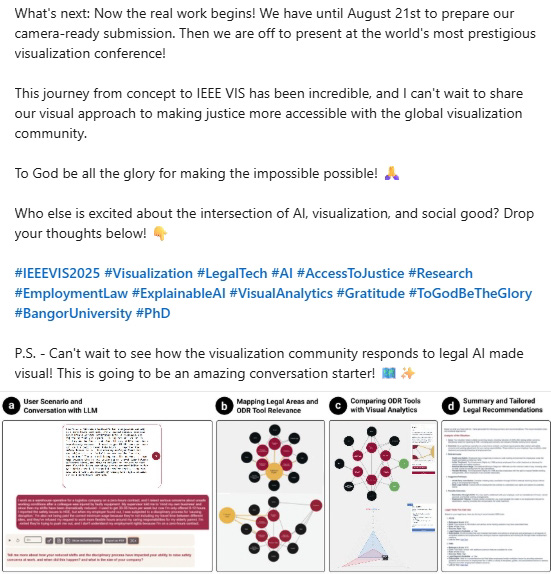
Chanju Park
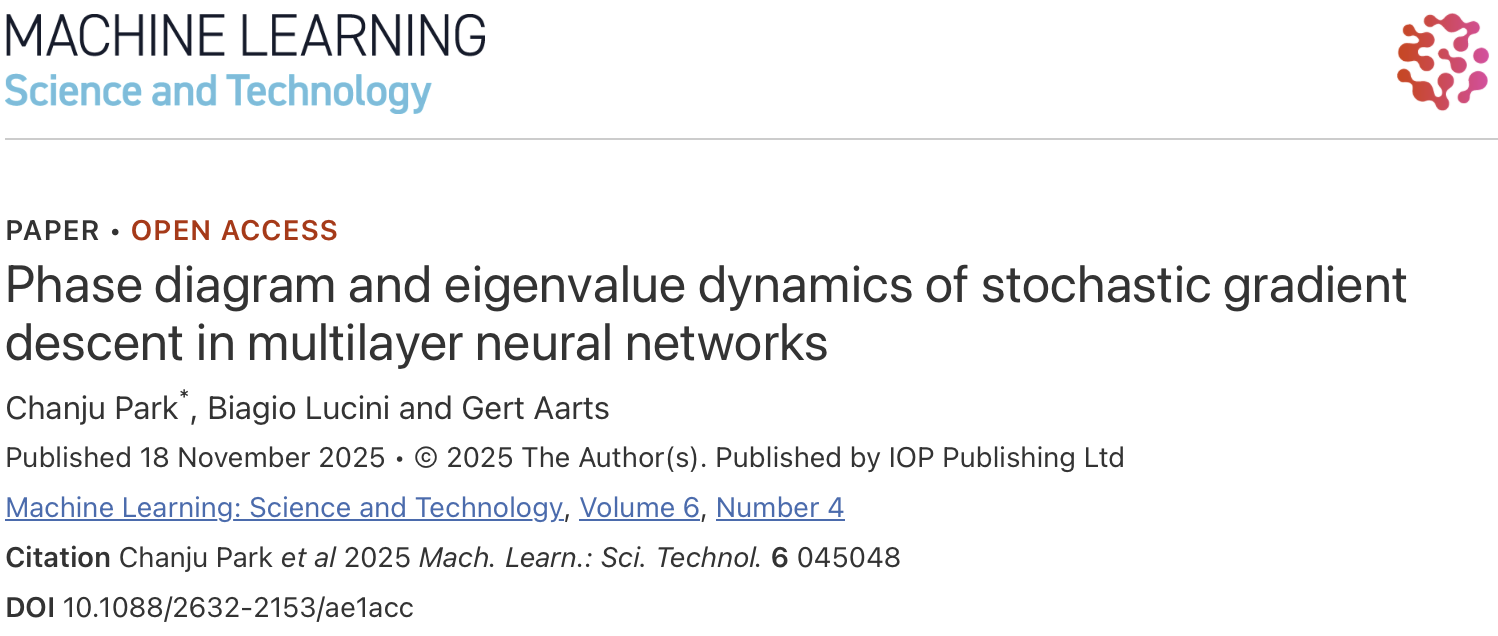
Chanju, Biagio, and Gert recently co-authored this new open-access study exploring stochastic gradient descent dynamics in multilayer neural networks, advancing theoretical understanding of optimisation behaviour in complex machine learning systems.
Natalia Sikora
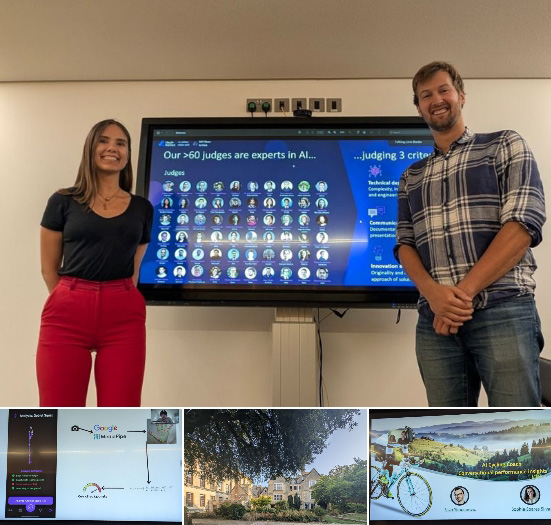
Natalia served as a judge at the Hack-Nation Global AI Hackathon supporting evaluation of projects from over 1,500 international participants across 65+ countries.
Teresa Matamoro Zatarain
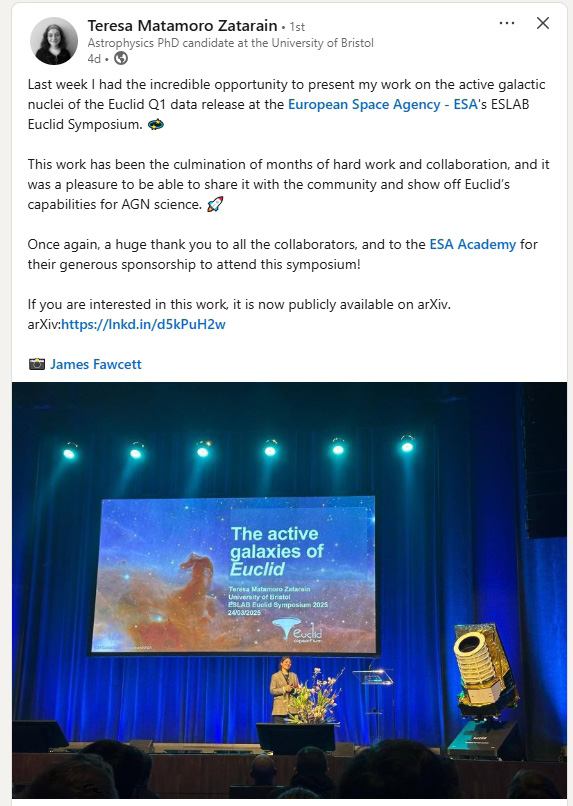
Congratulations to all of our current AIMLAC students on their ongoing achievements. We are incredibly proud of your progress and output and cannot wait to see what you achieve in the future!
DataAid: 14–15 March 2026
DataAid is our student driven programme which unites the analytical skills and expertise of PhD students in the AIMLAC CDT and PhD students from our partner universities, with charities in need of data support to generate valuable new insights and perspectives on the data they hold.
AIMLAC students worked in partnership with 'Bread and Butter Thing' who distribute high quality surplus food to thousands of families each week in over 155 community locations around the UK.
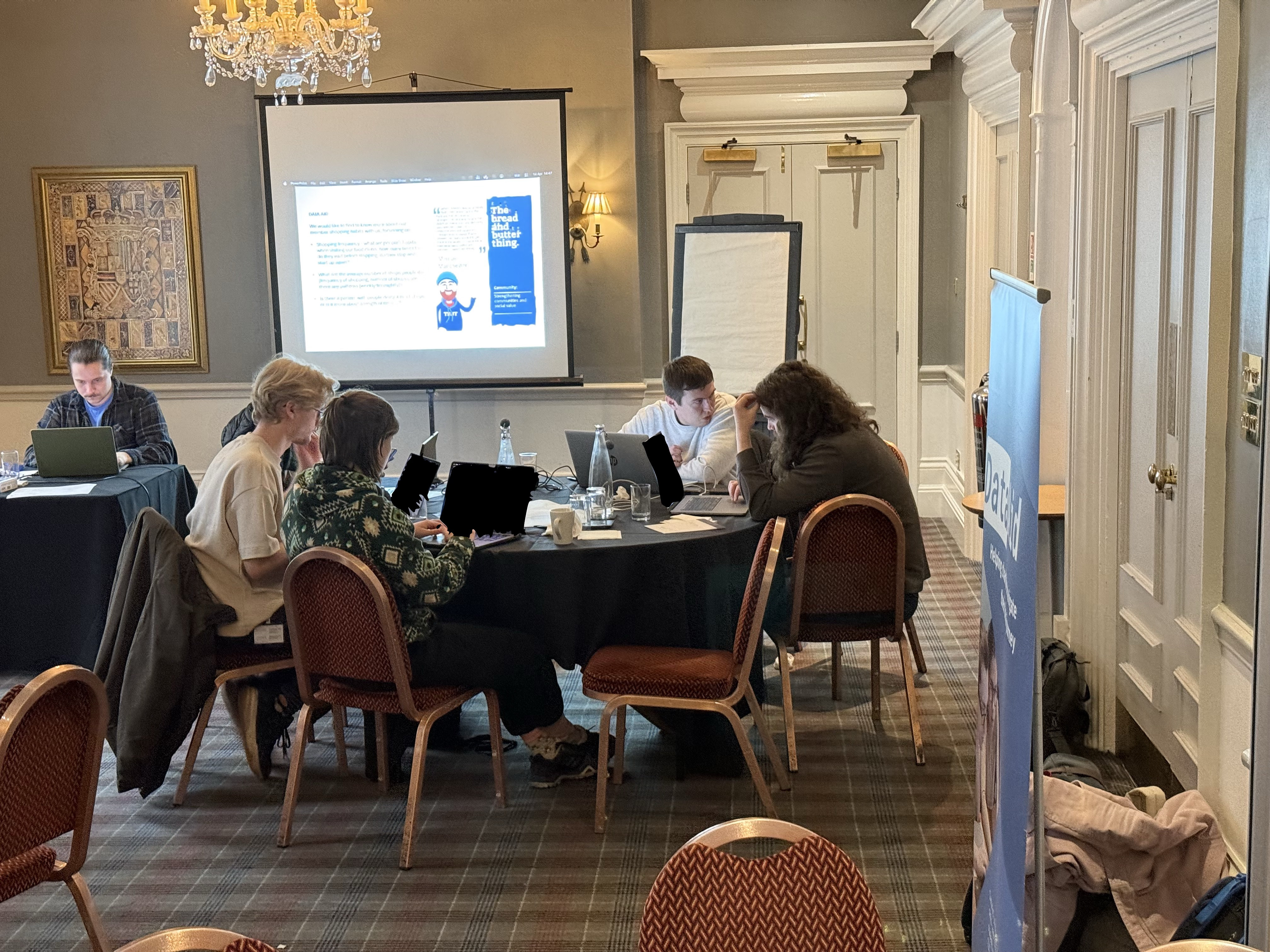
Committee member Diaa Habibi said: “DataAid was a fantastic opportunity to apply data analytics to a real social challenge. The Bread and Butter Thing's mission of reducing food wastage and helping disadvantaged families access affordable food made this year's DataAid event particularly meaningful. It was great to see PhD students with different backgrounds quickly form effective teams and, in less than just two days, produce results that could have a real impact. Working along with TBBT’s CEO, Vic Harper, the volunteers gained valuable experience, and the charity received insights that could help them better support families in communities around the UK.”

“It was fantastic to be able to implement what we have learned on our course and be able to help charities! We improved our current skills, as well as developing our communication, leadership, and organisation skills.” —AIMLAC student
AI Conference 2025
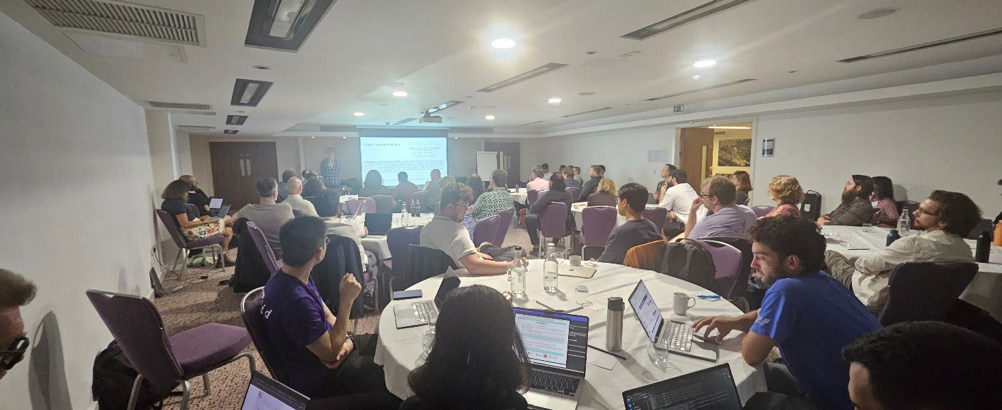
The 2025 Annual Conference of the UKRI Centre for Doctoral Training in Artificial Intelligence, Machine Learning and Advanced Computing (AIMLAC) was held in partnership with the University of Bristol‘s Interactive Artificial Intelligence and Practice-Oriented Artificial Intelligence CDTs, under the direction of Professor Gert Aarts and Professor Peter Flach. The event took place at the Radisson Blu Hotel in Bristol on 24–25 June 2025.
This highly successful conference brought together a vibrant community of doctoral researchers, academic leaders, and industry partners from across the UK and beyond. It provided a valuable platform for collaboration, knowledge exchange, and networking within the rapidly evolving fields of artificial intelligence and machine learning.
The programme featured an engaging and diverse range of talks, presentations, and discussions showcasing the breadth and depth of current research. More than 50 participants took part, contributing to sessions that explored cutting-edge applications of AI and machine learning in areas such as particle physics, astronomy, healthcare, and engineering, while also highlighting foundational advances in computer science.
A particular highlight of the conference was the strong involvement of the CDT's doctoral researchers, many of whom delivered presentations on their ongoing work. Dedicated sessions also addressed important cross-cutting themes, including AI governance, ethics, and responsible innovation— topics that are increasingly central to the development and deployment of AI technologies.
The event fostered a collaborative and inclusive environment, encouraging dialogue between academia and industry and supporting the professional development of early-career researchers. Attendees praised the high quality of the presentations and the opportunity to engage with a broad range of perspectives on both the technical and societal dimensions of AI.
Professor Gert Aarts, Director of AIMLAC, said: “Our annual conference continues to be a cornerstone of the AIMLAC programme, providing our doctoral researchers with an invaluable opportunity to present their work, exchange ideas, and build lasting collaborations. The breadth of topics covered this year reflects not only the diversity of AI research but also its growing impact across science, industry, and society. We are delighted to partner with colleagues in Bristol to deliver such a stimulating and successful event.”
AIMLAC Annual Conference 2026
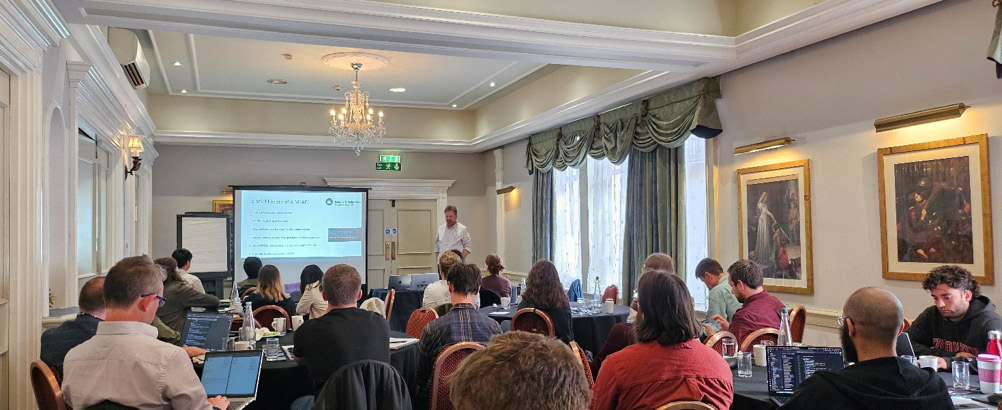
A Reflective and Celebratory Gathering in Cardiff
In May 2026, AIMLAC returned to Cardiff for its latest annual conference, hosted at the historic Angel Hotel on 13–14 May 2026. While this year’s event was more intimate in scale, reflecting the completion of several doctoral cohorts, it proved to be no less impactful, offering a rich and engaging programme for all who attended.
A Smaller Gathering with Big Ideas
With many students reaching the final stages of their PhDs, the 2026 conference was intentionally smaller than previous years. However, the size of the event created a more personal and reflective atmosphere, allowing for deeper discussions and stronger connections between participants.
Despite its scale, the conference maintained its hallmark high-quality presentations and stimulating discussions, showcasing the exceptional work of AIMLAC researchers and academic collaborators. Attendees benefited from a programme filled with insightful talks that demonstrated both the technical depth and real-world relevance of their research.
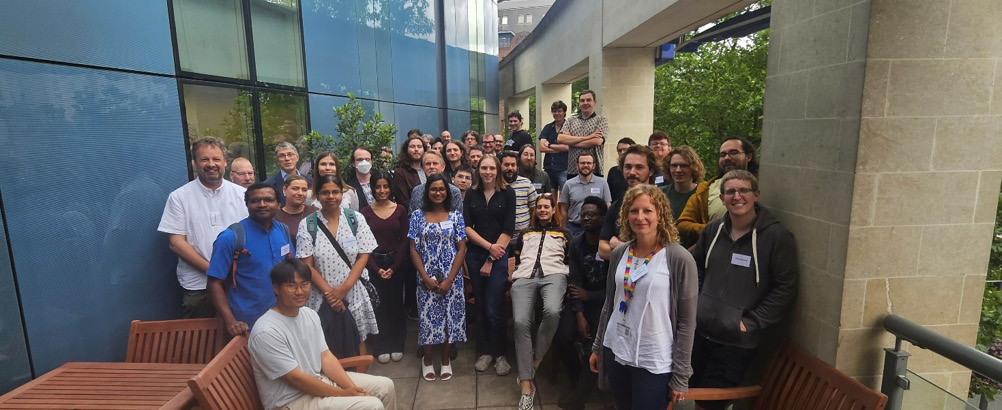
Celebrating Research and Alumni Success
A highlight of this year‘s event was the return of several AIMLAC alumni, who shared their experiences beyond the CDT and reflected on how the programme shaped their careers. We were delighted to welcome back Sophie Sadler, Robbie Webbe and Ben Winter from our 2019 cohort.
Each delivered engaging presentations on their current roles and research, offering valuable perspectives on life after AIMLAC whether in industry or postdoctoral positions. Their talks provided inspiration for current researchers, illustrating the diverse career pathways made possible through the programme, as well as personal reflections on their PhD journeys within AIMLAC
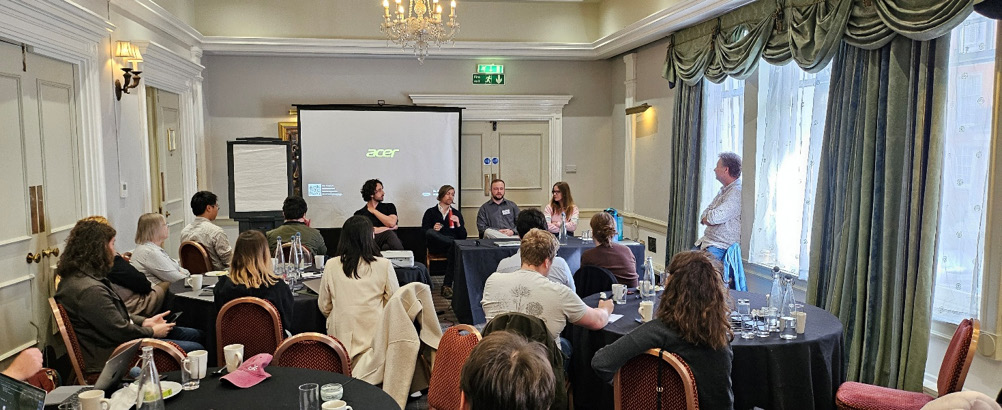
A Fond Farewell to Professor Gert Aarts
The conference also marked a significant moment for the AIMLAC community as we said farewell to Professor Gert Aarts, Director of AIMLAC. Professor Aarts is leaving Swansea University to take up a prestigious new position at Bielefeld University.
In his farewell talk, Professor Aarts delivered a thoughtful and inspiring reflection on his time leading the CDT. He spoke about the development and achievements of AIMLAC, the importance of collaborative research, and the successes of its doctoral researchers. His message was one of pride in the programme and in the many early-career researchers who have emerged from it.
His leadership has played a pivotal role in shaping AIMLAC into a highly regarded and collaborative doctoral training centre, and he leaves behind a strong and thriving community.
Looking Ahead to 2027
Planning is already underway for the next AIMLAC conference, which promises to be an exciting and expanded collaboration. We are pleased to be partnering with University College London, the University of Bath, and Imperial College London.
While arrangements are still in the early stages, the conference is expected to take place in Bristol during the first two weeks of March 2027. Further details will be shared in due course, but we encourage all members of the AIMLAC community and partners to save the date and look forward to another stimulating and collaborative event.
Previous newsletters
- Newsletter 5 (July 2024)
- Newsletter 4 (March 2023)
- Newsletter 3 (June 2021)
- Newsletter 2 (January 2021)
- Newsletter 1 (June 2020)